Instrukcja Teka DBB 90 Okap kuchenny

Potrzebujesz instrukcji dla swojego Teka DBB 90 Okap kuchenny? Poniżej możesz bezpłatnie obejrzeć i pobrać instrukcję w formacie PDF w języku polskim. Ten produkt ma obecnie zadane 2 pytania, 1 komentarz i 0 głosów. Jeśli nie jest to podręcznik, którego szukasz, skontaktuj się z nami.

Czy Twój produkt nie działa, a w instrukcji obsługi brakuje rozwiązania Twojego problemu? Udaj się do Repair Café, gdzie naprawisz swój sprzęt za darmo.

Instrukcja

Loading…
Dear client
Congratulations on your choice. We are sure that this
modern, functional and practical appliance, made with
top quality materials, will fully satisfy your needs.
Please read every section of this INSTRUCTIONS
MANUAL before using your kitchen hood for the
first time, to ensure maximum performance from the
appliance and to avoid breakdowns, which may be
caused by incorrect use, as well as to allow any minor
problems to be solved.
To obtain optimum performance, the external conduct
must not be more than FOUR METRES long, have no
more than two 90° angles and its diameter must be at
least Ø120.
Please be aware of current local regulations with
reference to domestic electrical fittings and gas
eduction.
• Verify that the tension and frequency of the network
match those indicated on the label located inside the
kitchen hood.
• Ifthesupplycableisdamageditshouldbereplacedby
the manufacturer, the after-sales service or a suitably
qualified person in order to avoid hazard.qualified
person in order to avoid hazard.
• Incaseyour cooker hoodis not providedwith aplug
for the mains connection or is not accessible in normal
conditions it is necessary to install a disconnection
switch to the house installation, according to the local
standards for installations.
• Make sure a good ground connection (this does not
apply to class II appliances, indicated accordingly on
the rate plate with )
• Oncethekitchenhoodhasbeeninstalled,ensurethat
the mains cable to the network is not in contact with
sharp metal edges.
• Thefumesshouldnotbeextractedthroughpipesthat
areusedtoevacuatethefumesofgas(oranotherfuel)
operated devices.
• Iftheextractorfanisgoingtobeusedsimultaneously
with equipment powered by a non-electric energy
source, e.g.: gas cookers, then the room must have
sufficient ventilation.
• Excessive fat accumulation in the kitchen hood and
metal filters is a fire risk and may also cause dripping,
therefore the inside of the kitchen hood and the metal
filters must be cleaned at least once a month.
• Thelowerpartofthekitchenhoodmustbefitted
at least 65cm over gas or mixed hobs. FOLLOW
THE HOBS´ MANUFACTURER’S MINIMUM
RECOMMENDATIONS. This distance can be reduced
if this is indicated by the manufacturer in the cooker
hood instruction manual.
• Neverleavegashobslitifnotcoveredbyacontainer.
The fat accumulated in the filters may drip or catch fire
when the temperature increases.
• Avoidcookingunderthekitchenhoodifthemetalfilters
are not fitted, e.g.: while they are being cleaned in the
dishwasher.
• Youmustnotproduceflamesunderthekitchenhood.
• Disconnect the appliance before any interior
manipulation, e.g. during cleaning or maintenance.
• Werecommendtheuseofglovesandtobeextremely
careful when cleaning the kitchen hood’s interior.
• Your kitchen hood is designed for domestic use and
only for extraction and purification of fumes produced
during food preparation. It will be your responsibility if
it is used for other purposes, which may be dangerous.
The manufacturer cannot accept responsibility for
damage caused by improper use of the appliance.
• Forrepairspleasecontactthemanufacturer’snearest
Technical Assistance Service, and always use genuine
spare parts. Repairs or modifications carried out by
unqualified personnel can cause malfunctions or may
damage the appliance, putting your safety in danger.
• This appliance is marked according to the European
directive 2002/96/EC on “Waste Electrical and
Electronic Equipment” (WEEE). This guideline is the
frame of a European-wide validity of return and
recycling on Waste Electrical and Electronic Equipment,
.
• Thisdeviceisnotmeanttobeusedbypersons(including
children) whose physical, sensory or mental capacities
are reduced, or who lack experience/ knowledge,
except if they have supervision or received instructions
forusingthedevicebythepersonresponsibleforhis/
her safety. Keep children away from the device and
never let them play with it.
Instructions for use
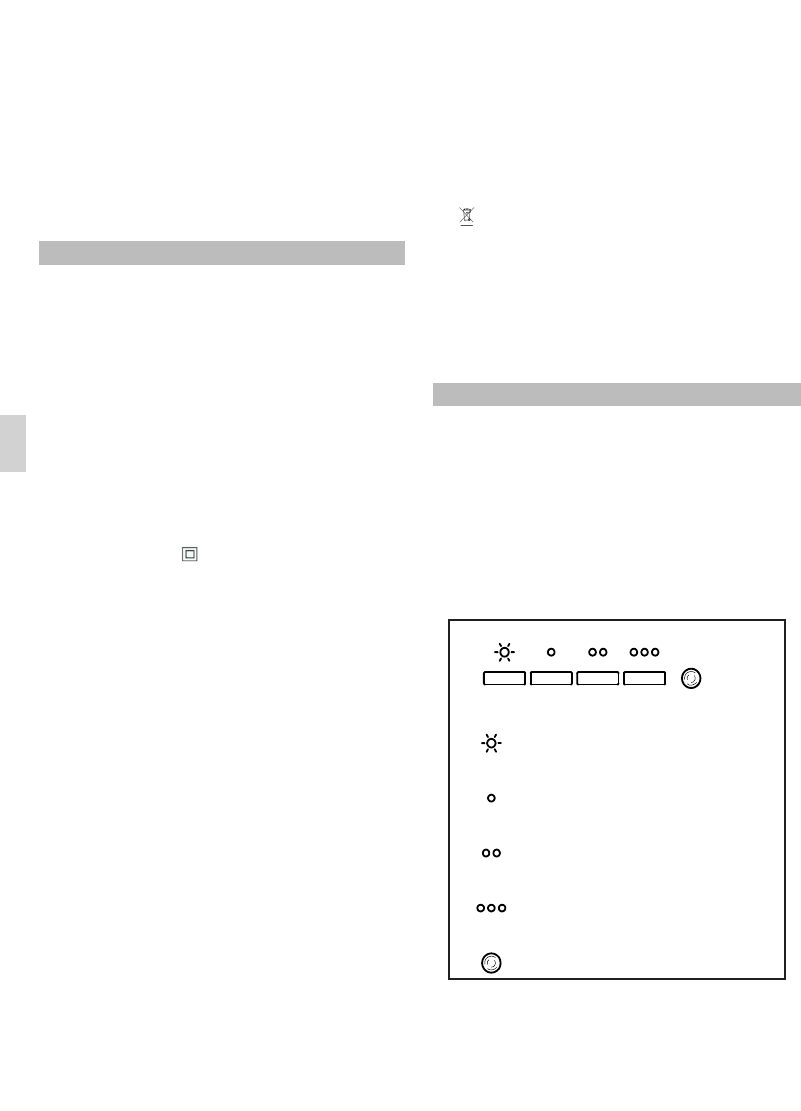
You can activate or deactivate the cooker hood by
operating the functions shown in the diagram.
Switch on the extractor fan a few minutes before you
start to cook in order to ensure that a steady air flow
has been established before fumes appear.
Allow the extractor fan to run for several minutes after
youhavefinishedcooking(between3to5minutes)in
order to expel all the grease from the outlet duct. This
prevents the return of grease, smoke and smells.
Safety Instructions
GB
Light
Minimum speed
Medium speed
Maximum speed
Pilot indicator
Pobierz instrukcję w języku polskim (PDF, 2.63 MB)
(Apelujemy o dbanie o środowisko i drukowanie instrukcji tylko wtedy, gdy jest to niezbędne)

Loading…

Ocena

Podziel się z nami swoją opinią na temat Teka DBB 90 Okap kuchenny i oceń urządzenie. Chcesz podzielić się swoimi doświadczeniami z tym produktem lub zadać pytanie? Zostaw komentarz na dole strony.
Czy jesteś zadowolony z Teka DBB 90 Okap kuchenny?
Tak Nie
Zostań pierwszą osobą, która oceni ten produkt
0 głosów

Dołącz do dyskusji na temat tego produktu

Tutaj możesz podzielić się swoją opinią na temat Teka DBB 90 Okap kuchenny. Jeśli masz pytanie, najpierw dokładnie przeczytaj instrukcję. Zapytanie o instrukcję można złożyć za pomocą naszego formularza kontaktowego.

Alejandro 28-08-2020
Jeśli mam odprowadzanie gazów na zewnątrz, czy mogę również umieścić na okapie filtry z węglem aktywnym i dzięki temu uzyskać większą absorpcję zapachów?

odpowiedz | To było pomocne (0) (Przetłumaczone przez Google)

Więcej o tej instrukcji

Rozumiemy, że miło jest mieć papierową instrukcję obsługi Teka DBB 90 Okap kuchenny. Zawsze możesz pobrać instrukcję z naszej strony internetowej i wydrukować ją samodzielnie. Jeśli chcesz otrzymać oryginalną instrukcję, zalecamy skontaktowanie się z Teka. Być może będą w stanie dostarczyć oryginalną instrukcję. Szukasz instrukcji swojego Teka DBB 90 Okap kuchenny w innym języku? Wybierz preferowany język na naszej stronie głównej i wyszukaj numer modelu, aby sprawdzić, czy jest on dostępny.

Dane techniczne

Marka Teka
Model DBB 90
Kategoria Okapy kuchenne
Typ pliku PDF
Rozmiar pliku 2.63 MB

Wszystkie podręczniki dla Teka Okapy kuchenne
Więcej podręczników Okapy kuchenne

Często zadawane pytania dotyczące Teka DBB 90 Okap kuchenny

Nasz zespół wyszukuje przydatne informacje na temat produktu i udziela odpowiedzi na często zadawane pytania. Jeśli znajdziesz nieścisłości lub błędy w naszych odpowiedziach na pytania, poinformuj nas o tym przy pomocy naszego formularza kontaktowego.

Jaka powinna być odległość między okapem a płytą kuchenną w mojej kuchni? Zweryfikowany

Może to trochę zależeć od marki, ale ogólnie okap kuchenny powinien być umieszczony co najmniej 65 centymetrów nad płytą gazową i co najmniej 50 centymetrów nad kuchenką elektryczną lub indukcyjną. Ma to na celu poprawę bezpieczeństwa pożarowego.

To było pomocne (1344) Czytaj więcej

Czy potrzebuję okapu z silnikiem czy bez? Zweryfikowany

Okapy z silnikiem przeznaczone są do wywiewu powietrza bezpośrednio na zewnątrz. Okap bez silnika przeznaczony jest do instalacji centralnej wentylacji. Nigdy nie podłączać okapu kuchennego z silnikiem do centralnego systemu wentylacji!

To było pomocne (781) Czytaj więcej
Instrukcja Teka DBB 90 Okap kuchenny

Produkty powiązane

Powiązane kategorie

×
Download